
Amidst a thicket of canopy trees and shrubs, a few kilometres from Nakuru town, lies the fascinating and magnificent Lord Egerton Castle. Built by Lord Maurice Egerton in 1952, the castle casts its shadow on lush lawns and chiselled boulders that dot its stairways. It tells one of Kenya’s most enduring love stories — albeit one without a fairy-tale ending.
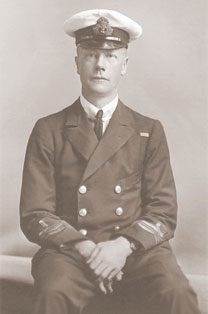
The Childhood of Egerton
Born into a royal family of Lords in 1874, Lord Maurice Egerton was the son of Lady Anna Louisa Taylor and Alan de Tatton. Of three siblings, his brother William (b. 1868) and sister Cecile (b. 1871) died in childhood, leaving Maurice the sole heir to a vast fortune. He schooled in Britain for ten years before joining the British Royal Navy, following his father’s footsteps. When his father died in 1920, Maurice became the fourth Baron of Egerton, inheriting both the family wealth and the title “Lord.” He developed lifelong passions for photography and hunting.
Entry into Kenya
Lord Maurice Egerton came to Africa through Zimbabwe, travelled up through Congo and Uganda, and entered Kenya in 1920. The British government of the day offered ex-military personnel land as a token of appreciation, and Egerton acquired 44 km of land in the Nakuru–Njoro region. Inspired by Lord Delamere to take up agriculture, he bought further acres around Rongai, Molo, Ngata and Lake Nakuru — land that runs to the present-day Egerton University.
Tying the Knot
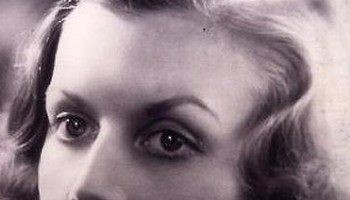
By English aristocratic convention, Maurice was expected to marry a lady of equal status. At 45 he courted an Austrian princess whose ancestry descended from Queen Elizabeth. Hoping to impress her, he first built a modest four-roomed cottage — but on visiting, she spent barely two hours in the compound. Undeterred, Maurice resolved to build a grander house worthy of her status.
The Castle Takes Shape
Lord Egerton set out to build a mansion modelled on his family home at Tatton Park, Cheshire. He laid the foundation in 1938 and contracted the English architect Albert Brown, a team of a few hundred labourers, and a group of Italian builders. The Second World War interrupted the project, calling Lord Egerton back to England. When the war ended in 1945 he returned to resume construction, which continued for nine years.
Imported Materials & Grand Fixtures
Building materials and designers were imported from Britain and Italy. The rocks were purchased abroad, interior tiles came from China, and sparkling green marble for the fireplaces from Italy. Imported zinc tiles adorn the roof; polished curved stones line the two-floor balcony. Interior walls and stairways were panelled in British oak — the only local materials used were kinoo and Njiru stones.
Among its treasures is a grand piano-organ of 411 pipes rising the full height of two floors. A guests’ lobby connects to a huge ballroom built for high-calibre entertainment, meetings and celebrations. The castle also houses a master bedroom, a children’s room, a photography room, a library, a reading room, a kitchen, a laundry, guesthouses and countless alleyways and cloistered venues.
A Love Unrequited
Floor by floor the great structure rose, said to resemble the neo-classical family mansion in England. Yet the lady he hoped to woo was unimpressed, calling it small. She left for Australia in 1954 and married a filmmaker. Heartbroken but resolute, Maurice furnished the entire castle regardless, and thrice a year a musician would travel from England to play his favourite ballads on the organ.
A Lasting Legacy
During the 38 years he lived in Africa, Lord Egerton played a crucial role in Kenyan education, founding what is today Egerton University. He lived at the castle as a loner until his death in 1958 and lies buried in Nakuru. Today his castle stands as a proud heritage landmark — open to visitors who wish to walk its halls and hear its story first-hand.
For the full story, visit Lord Egerton Castle where our guides will take you through the whole castle as they narrate this remarkable history.